
Grants
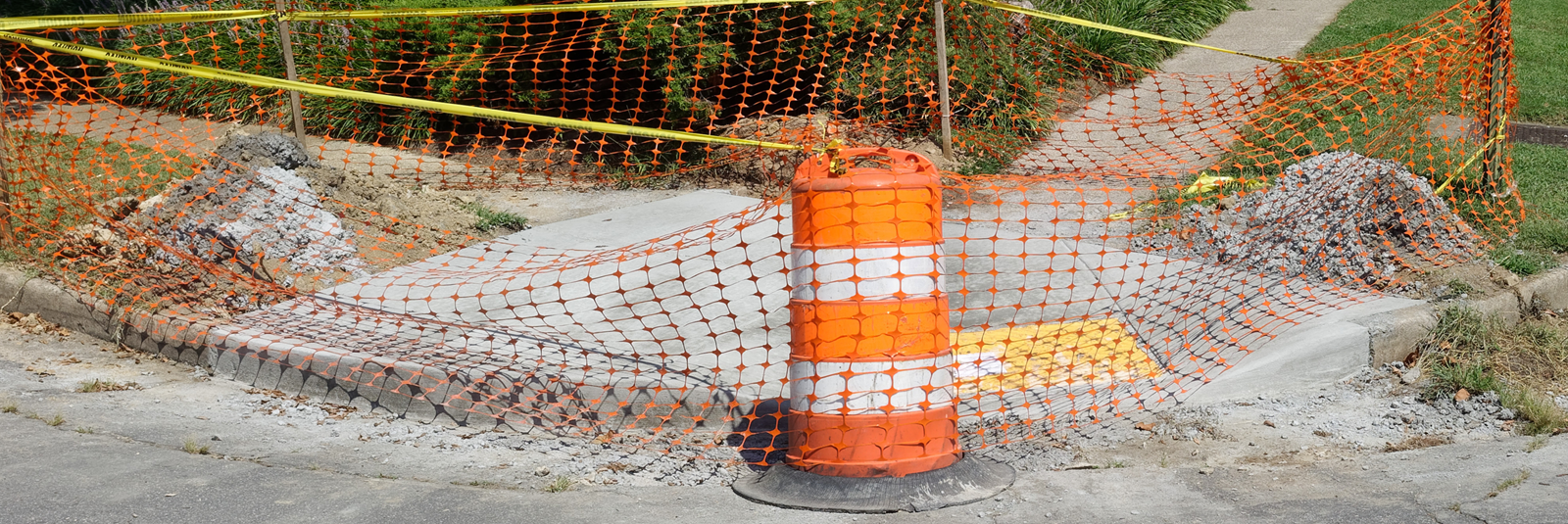
Grants
The Office of Planning and Development administers applications and provides assistance to the recipients of several grant programs whose goal is to fund activities that will benefit disabled or low-income persons, expand the supply of decent, affordable housing, and address homelessness.
COMMUNITY DEVELOPMENT BLOCK GRANT (CDBG) APPLICATION REQUIRMENTS FOR 2026 CDBG PROGRAM
Applications are now being accepted from all County municipalities, community non-profits, and other organizations serving residents of Adams County for the 2026 Community Development Block Grant Program (CDBG). The County has been allocated $315,449.00 for the 2026 CDBG program year.
DUE DATE:
2026 CDBG applications will be due to Adams County Office of Planning and Development (ACOPD) by Friday, July 31, 2026.
In order to give you adequate time to prepare your funding requests and to complete any necessary surveys, we are providing you with the CDBG eligibility and fundability requirements at this time.
- If you are considering applying for funding, you must contact our office to schedule a pre-application appointment to discuss your project before submitting your materials.
- The pre-application meeting is a requirement in order to be considered for funding. All pre-application meetings must be scheduled no later than June 30, 2026.
PROJECT FUNDABILITY REQUIREMENTS
In order to meet CDBG project requirements, the County will have to prove that all projects meet one of the CDBG objectives for residents of Adams County:
- Benefits low to moderate income persons (this must be demonstrated with income data for each beneficiary, census data for the service area, or survey results for the service area – see below)
- Removal of slums or blight.
- Meets an urgent community need, usually disaster related.
- Benefits specific populations, including the elderly, persons with disabilities, abused children, battered spouses, homeless persons, illiterate adults, persons living with HIV/AIDS, or migrant farm workers.
ELIGIBILITY REQUIREMENTS:
All activities funded with CDBG funds must also be determined to be eligible under the provisions of Title I of the Housing and Community Development Act of 1974, P.L. 93-383, as amended, as administered by the U.S. Department of Housing and Urban Development. This means the activity must provide one or more of the following to Adams County residents:
- Homebuyer Assistance /Tenant Assistance
- Affordable Housing Construction/ Housing Rehabilitation
- Code Enforcement
- Water System Improvements
- Sanitary Sewer System Improvements
- Storm Sewer Systems
- Public Community Facilities
- Recreation Facilities
- Street/Road Improvements
- New Public Services (Note that funding for public services is limited to 15% of the County’s total grant for 2026)
- Job Creation
- Architectural Barrier Removal
For more information on eligible activities please review HUD's CDBG Guide to National Objectives and Eligible Activities for Entitlement Communities.
APPLICATION REQUIREMENTS
If your municipality or agency decides to request 2026 CDBG funds, the governing body will need to pass a Resolution requesting the County apply for CDBG funds on your behalf and write a letter requesting consideration for funding. This must be completed by Friday, July 31, 2026.
Please contact ACOPD before finalizing your Resolution and letter so that we can discuss your project and the budget for your request.
If your project will be serving a specific geographic service area, rather than being limited to qualified beneficiaries who are screened for eligibility, to be eligible for CDBG funds over 51% of the residents of that area must meet the low to moderate income guidelines. Note that if census data is not available for your specific service area from the 2015 American Community Survey, a survey of households in the service area must be conducted and completed prior to July 31, 2026. Please contact me prior to initiating this survey to ensure that it is conducted in accordance with HUD/DCED guidelines.
The number of responses required are dependent upon the number of residents in the service area. Keep in mind that for infrastructure projects, such as water/ sewer line replacements, the service area includes every customer connected to the system. Be advised that when percentages are calculated non-responses are considered to be above the income limits. In the case of funding sewer/ water tapping fees or homeowner rehab projects, the residents will have to provide actual proof of income in order to qualify for assistance. Also, the use of CDBG funds will trigger Federal contracting provisions including the use of Davis-Bacon Wage Rates if project construction will be involved.
It may be necessary to translate income survey information depending upon the number of people with Limited English Proficiency there are in the community. Our office will have the survey information translated and assist with the preparing the questionnaires and tabulating the responses, as well as providing other technical assistance.
APPLICATION COMPONENTS
For those applying for the first time, and as a reminder for previous applicants, I have included the following checklist of items required in your application to the County (as applicable):
- Identify your project goals: Specify what the activity will accomplish for your municipality or agency. What community needs will the project address? How serious are the problems?
- Describe the project service area. Please submit a municipal map showing the service area with precise boundaries of the project’s area.
- Who will the project serve, i.e., elderly, low to moderate income households, etc.? Please provide an estimated number of beneficiaries.
- Provide a budget for the entire project (not just the part you wish to fund with a CDBG grant). Please indicate if other funding has been applied for or secured. The budget must include a line-item breakdown and a justification explaining how the costs were estimated. Documentation (cost per participant, facility rental rates, quotes from a service provider, quotes for freight charges or piece of equipment, etc.) must be included.
- Provide a timeframe for project completion. Note that 2026 funds will most likely be available to you in approximately mid-2027 and must be spent within 3 years from the contract start date.
- Please include a commitment letter from other funding sources for the balance of the project cost that won’t be covered by CDBG. Note that if your project will provide services county-wide, it is subject to a Fair Share contribution percentage requirement of the overall project cost.
- Census tract information must also be included in the application, as applicable.
- Will a survey be necessary to prove eligibility? Provide the survey results if one was conducted (if applicable).
- Provide pictures of the service area to show problems that will be addressed.
- If a project is for ADA compliant curb ramps – ramp locations must be identified and locations numbered, along with corresponding numbered photos of the locations, as well as a project area map with numbered locations identified on the map and submitted at time of application. If there are alternate locations, those must be identified as well on a separate listing, photos, and map as well.
- If any permits are necessary to complete your project, have they been applied for or issued?
- If you are providing public services, explain how you will limit CDBG funds to cover services to qualifying beneficiaries only (Adams County residents who are low/moderate income, disabled, migrants, etc.) Include a copy of your intake form if you serve both CDBG-eligible and CDBG-ineligible clients if this is applicable to your project.
- If you are providing public services, note that the CDBG program only funds new public services projects or existing ones that will be able to demonstrate a quantifiable increase in the level of service over that which existed in the 12 months immediately prior to the submission of the application. A public services project is considered new if it is new to the community or if this is the first time CDBG funds are being used to support the activity (some exceptions apply). Please provide information on how your public services project meets these requirements (as applicable).
- Other requirements: Depending on the nature of your project, additional information may be required to apply.
Please contact Deana Duvall, Grant Coordinator, at (717) 337-9824 to schedule a pre-application meeting to discuss your proposed funding request.
Programs and Guidelines
CDBG
Community Development Block Grants are made available to non-entitlement municipalities and organizations serving low to moderate income persons. Funds may be used toward projects providing housing rehabilitation, public services, community facilities, improvements to infrastructure, development, and planning.
Click the View button to learn more about the CDBG program and guidelines from DCED
ESG
Emergency Solutions Grants (formerly known as Emergency Shelter Grants) provide funding for homeless shelter operations, eviction prevention, and rapid rehousing. These funds are awarded by the Commonwealth through a competitive process. County governments are normally the applicant and recipient for these funds. Nonprofits that wish to apply would do so as a subrecipient of the County.
All funding rounds are currently closed. Interested organizations can contact the Office of Planning and Development to discuss the process for becoming a County ESG subrecipient.
Home
The HOME program is a federally funded program that provides municipalities with grant and loan assistance to expand and preserve the supply of decent and affordable housing for low- and very low-income residents provide resources to develop and maintain affordable housing.
Click the View button to learn more about the HOME program and guidelines from DCED.
Resources
Partner Agency Links
CDBG Dashboard
View local CDBG funded project locations, entities, and funding amounts.